
You’ve heard it everywhere – “you need SEO to grow online.” But every time you try to learn it, you hit a wall of confusing terms, contradictory advice, and tools that feel like they were built for engineers, not regular people.
And now there’s AI in the mix. So what does that even mean for your website?
Here’s the good news: if you want to learn AI SEO, you’ve landed in the right place. This guide strips everything down to the essentials and walks you through it step by step — no prior knowledge required. By the end, you’ll know exactly what to do, what tools to use, and what mistakes to avoid in this SEO for beginners guide for 2026.
What Is SEO – and What Is AI SEO?
Let’s start from the very beginning.
SEO stands for Search Engine Optimization. In plain English, it means making your website easy for search engines like Google to understand – so when someone searches for something related to what you do, your page shows up.
Think of it this way: Google is like a massive library, and SEO is how you get your book shelved in the right section, with a clear title and a great summary. The better organized your book is, the more likely people are to find it.
So what’s AI SEO?
AI SEO is simply using artificial intelligence tools and techniques to do SEO faster, smarter, and more effectively. Instead of spending hours manually researching keywords or guessing what your audience wants to read, you use AI to help you make better decisions — and create better content.
For example: instead of staring at a blank page wondering what to write, you could use a tool like ChatGPT to outline your article. Instead of manually checking how your page performs, AI-powered tools give you instant insights.
How AI Is Changing SEO in 2026
The SEO landscape in 2026 looks very different from even two years ago – and the shift is accelerating fast.
Google Search has integrated AI deeply into how it ranks content. It no longer just matches keywords; it understands meaning, context, and intent. Google’s AI can tell if your content genuinely helps a reader or if it’s stuffed with keywords to game the algorithm.
At the same time, tools like ChatGPT have changed how people search. More users now type full questions into AI assistants and get direct answers — without clicking on a website at all. This means that to get noticed, your content needs to be the kind of source that AI systems trust and cite.
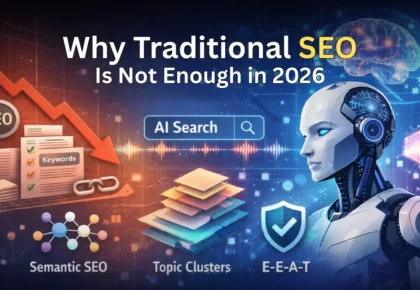
Why traditional SEO alone isn’t enough anymore
The old playbook — write a blog post, stuff it with keywords, build some backlinks — still plays a role, but it’s no longer sufficient on its own. Algorithms now reward content that is:
- Genuinely helpful — it answers the real question a person has
- Authoritative — it demonstrates real knowledge and experience
- Well-structured — it’s easy for both humans and AI to read and understand
- Optimized for intent — it matches what someone actually wants when they search
This is why learning AI for SEO isn’t just trendy — it’s essential for anyone who wants to grow their online presence in 2026 and beyond.
Step-by-Step: How to Learn AI SEO
Ready to get practical? Here’s exactly how to learn SEO step by step using AI tools and modern best practices.
Keyword Research — Find What People Actually Search For
Keyword research is the foundation of any SEO strategy. You’re essentially trying to figure out: what words and phrases do people type into Google when they’re looking for something I offer?
But here’s where most beginners go wrong — they focus on the keyword, not the intent behind it. A person searching “how to start a blog” wants a tutorial. A person searching “best blogging platforms 2026” is comparing options before making a decision. Same topic, completely different needs.
With AI tools like ChatGPT, you can now brainstorm keyword ideas by simply asking: “What questions would a beginner ask about starting a blog?” You’ll get a rich list of real-world queries in seconds. Pair this with a dedicated keyword tool (more on those below) and you have a powerful research process.
Focus on: long-tail keywords (3–5 word phrases), questions people ask, and keywords that match your content’s purpose.
Content Creation — Write for Humans, Optimized for AI
Content is still king — but the definition of “good content” has evolved. In 2026, search engines evaluate whether your content genuinely satisfies the reader’s intent. Thin, generic articles don’t cut it anymore.
Here’s how to use AI to create better content without sounding robotic: use tools like ChatGPT or Claude to generate an outline, brainstorm angles, and overcome writer’s block — but always write with your own voice and add personal insight, examples, or experience.
A practical workflow: ask an AI tool to give you a content outline for your target keyword, then fill in each section yourself. Review the top-ranking pages on Google for the same keyword and ask: what’s missing from those articles that I can add? That gap is your competitive advantage.
Pro tip: AI-generated content that lacks original perspective tends to rank poorly. Your lived experience and unique examples are what make content stand out — both to readers and to Google.
On-Page Optimization — Make Every Page Work Harder
Once your content is written, it’s time to optimize the page itself. On-page SEO refers to all the elements on a single page that signal relevance to search engines.
The basics you should cover on every page:
- Title tag: Include your main keyword naturally. Keep it under 60 characters.
- Meta description: A 150–160 character summary of your page — this is what people see in search results.
- Headings (H1, H2, H3): Structure your content clearly. Use your keyword in at least the H1.
- Internal linking: Link to other relevant pages on your own site to help users (and search engines) explore.
- Image alt text: Describe your images in plain language — it helps accessibility and SEO.
AI tools can audit your page and flag exactly what’s missing, saving you hours of manual checks. Tools like Surfer SEO and NeuronWriter even compare your page against top-ranking competitors and suggest specific improvements.
Best AI SEO Tools for Beginners
You don’t need to buy every tool on the market. These are the most beginner-friendly SEO search tools for beginners that deliver real results without a steep learning curve.
Free, official, and incredibly powerful. See exactly which keywords bring people to your site and fix any indexing issues. Start here before anything else.
A beginner-friendly keyword research tool with a clean interface. Gives you search volume, keyword difficulty scores, and content ideas — all in one place.
An AI-powered on-page optimizer. Paste your article in, and it scores your content in real time against top-ranking pages, suggesting word count, headings, and keywords to include.
Brilliant for brainstorming keywords, drafting outlines, rewriting weak sections, generating meta descriptions, and answering your SEO questions in plain English.
Visualizes the questions people actually type into search engines around any topic. Goldmine for finding content ideas and long-tail keywords.
Industry-leading tool with a free tier that gives you keyword research, site audits, and competitor insights. Plenty of power for beginners getting started.
Common Mistakes Beginners Make (And How to Avoid Them)
Learning what to do is half the battle. Knowing what not to do is the other half.
- Targeting keywords that are too competitive
Beginners often go after broad, high-volume keywords like “digital marketing.” These are dominated by massive sites with years of authority. Start with specific, long-tail keywords where you can actually compete. - Publishing AI content without editing it
Raw AI-generated content is often generic, surface-level, and missing the human insight that makes content rank well. Always edit, add your perspective, and verify facts before publishing. - Ignoring search intent
Writing a sales page when someone is looking for a tutorial — or vice versa — means Google won’t rank you even if every other element is perfect. Always match your content type to what the searcher actually wants. - Skipping technical basics
A slow website, broken links, or pages Google can’t crawl will hold back even great content. Run a free site audit with Google Search Console or Ubersuggest to catch these early. - Expecting overnight results
SEO is a long game. Most new pages take 3–6 months to gain traction. Consistency beats urgency — publish quality content regularly and the results will compound over time. - Writing for search engines instead of people
Keyword stuffing is a relic. Modern search algorithms are sophisticated enough to detect when content is written for bots rather than humans. Write naturally and the keywords will fall into place.
Conclusion: You’re Closer Than You Think
SEO has always seemed intimidating to beginners — and adding AI into the picture can make it feel even more overwhelming. But the truth is simpler than most people realize.
At its core, this AI SEO guide comes down to three things: understand what people are searching for, create content that genuinely helps them, and use AI tools to work smarter along the way. That’s it.
You now know the difference between traditional SEO and AI SEO. You have a clear step-by-step process to follow. You know which tools to start with. And you know the pitfalls that trip up most beginners before they even get started.
The only thing left is to actually begin. Pick one keyword. Write one article. Optimize one page. SEO momentum is built one piece of quality content at a time.
⚡ Limited Seats — Filling Fast
Ready to Go Deeper? Join the AI SEO Masterclass
Take everything in this guide and accelerate it with hands-on training, live examples, and a proven AI SEO system built for 2026. Spots are limited and the next cohort opens soon.
Claim Your Spot in the Masterclass →
SEO is changing fast. The best time to master it is right now.